

AgateonAgents on the gate.
Run your software task through orchestrated agents and machine-checked gates — you get a verified result out, not a story about how it should work.
Run your software task through orchestrated agents and machine-checked gates — you get a verified result out, not a story about how it should work.
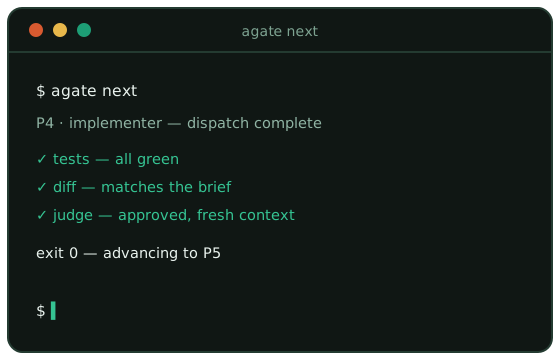
Hand the task to the orchestrator. Eight phases — requirements, design, test-first, implementation, verification, acceptance, consistency, release — each must pass a machine-checkable gate before the state machine advances. What comes out is tested, documented, verifiable work.
Progress is decided by objective signals — test exit codes, git log, BDD counts — not by “looks about right.” A failed gate bounces the phase back; nothing advances until the signal is real.
All progress lives in version-controlled Markdown. A killed session resumes where it left off, and every step is auditable from git history.
One orchestrator plans and dispatches; independent subagents execute; gates judge. The agent doing the work never signs off on its own work.
Install and run Agateon from a fresh checkout:
curl -sSL https://raw.githubusercontent.com/randomgitsrc/agateon/main/install.sh | bashNo runtime, no daemon. The protocol is a set of Markdown cards plus gate scripts, stored in version control alongside your work.
This repository is its own first customer: every task in agate-workspace/tasks/ — including the fixes for its own failures, like the independent judge — was produced by running Agateon on itself. The list is the evidence; it grows with every task. The gates you'd rely on are the same gates that built this site.
Latest · 2026-10-09 · 8 min read
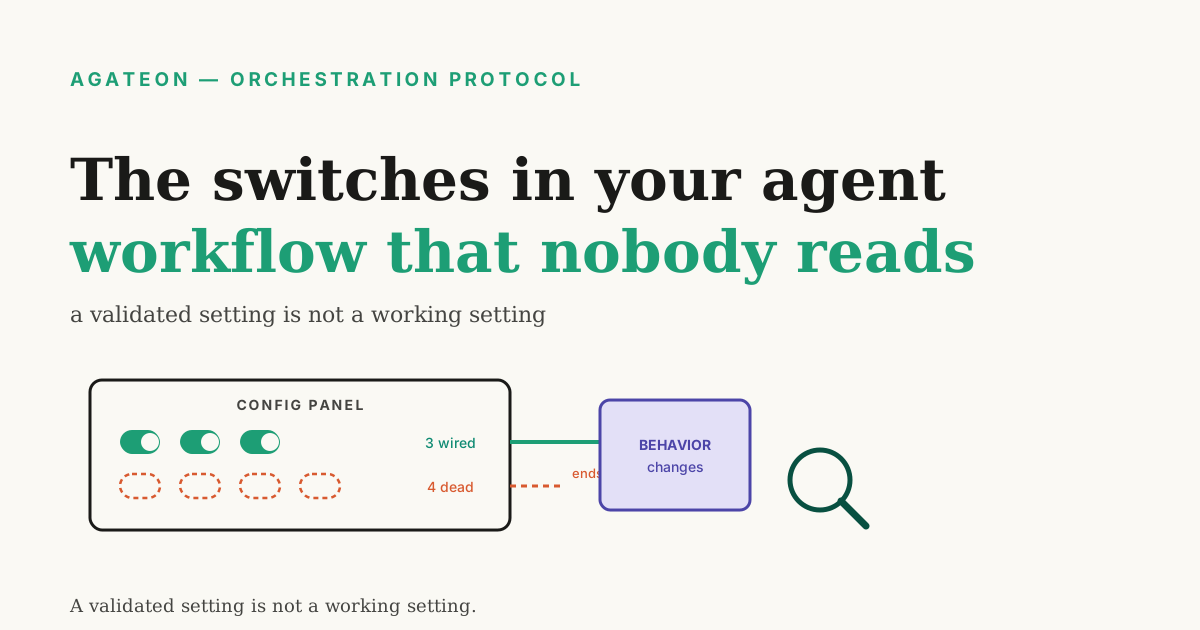
The switches in your agent workflow that nobody reads
Config that gets validated is not config that gets used. A three-step audit for finding dead switches in your own agent workflow — plus what happened when we ran it on ours, including the part where our first diagnosis turned out to be wrong.
Read the post →